
How the Stock Market Actually Works (Explained Like You're New)
The stock market is a marketplace where people buy and sell small slices of ownership in real companies, called shares. A company sells these slices to raise money, and after that, investors trade them with each other. When you own a share, you own a tiny piece of an actual business, and its price moves up and down as buyers and sellers change what they are willing to pay.
That is the whole idea in one paragraph. The confusing part is all the noise on top: flashing numbers, red and green arrows, and headlines that make it sound like a casino. Strip that away and the stock market is just a giant, well-organised second-hand marketplace for pieces of companies. Let's build it up one layer at a time.
What is a share, really?
Imagine a pizza shop that wants to open ten new stores but does not have the cash. The owner can borrow the money, or she can sell part of the business to other people. If she splits the company into a million equal slices and sells some of them, each slice is a share. Whoever buys one owns that fraction of the whole business.
Owning a share means two real things. You have a claim on a piece of the company's future profits, often paid out as a dividend. And you have a piece of the company's value, so if the business becomes worth more, your slice becomes worth more too. You are not buying a lottery ticket with a number on it. You are buying part ownership of a working business.

This is the foundation everything else sits on. A share price is not a random number on a screen. It is the going rate for one slice of a real company, set by thousands of people deciding what that slice is worth to them today.
How does a share reach the market in the first place?
A company does not start out on the stock market. It gets there through a step called an initial public offering, usually shortened to IPO. This is the first time the company sells its shares to the public to raise money. This first sale is called the primary market, and it is the one moment the company itself actually receives cash from selling shares.
After that first day, something important changes. The shares now belong to investors, and those investors trade them among themselves. This ongoing buying and selling is called the secondary market, and it is what almost everyone means when they say "the stock market." When you buy a share of a well-known company today, your money does not go to that company. It goes to whoever sold you the share.
Here is the difference in one table.
| Primary market | Secondary market | |
|---|---|---|
| What happens | Company sells new shares | Investors trade existing shares |
| Who gets your money | The company | Another investor |
| How often | Rarely, at the listing | Constantly, all trading day |
| Everyday name | The IPO | "The stock market" |
Understanding this split clears up one of the most common beginner confusions. Most of your investing life happens in the secondary market, trading slices that already exist with other people who own them.
How does buying and selling actually work?
You cannot walk onto the trading floor yourself. You place orders through a broker, which today is usually an app or website. A broker is a licensed middleman that is plugged into the exchange, the organised venue where trades happen. You add money to your account, choose what you want to buy, and place an order. The broker sends it to the exchange to be matched.
Matching is the clever bit. At any moment, some people want to buy a share and some want to sell it. An exchange is essentially a huge, fast auction that pairs a willing buyer with a willing seller and agrees a price both accept. If you want to buy at the current asking price, and someone is selling at that price, the trade completes in a fraction of a second.
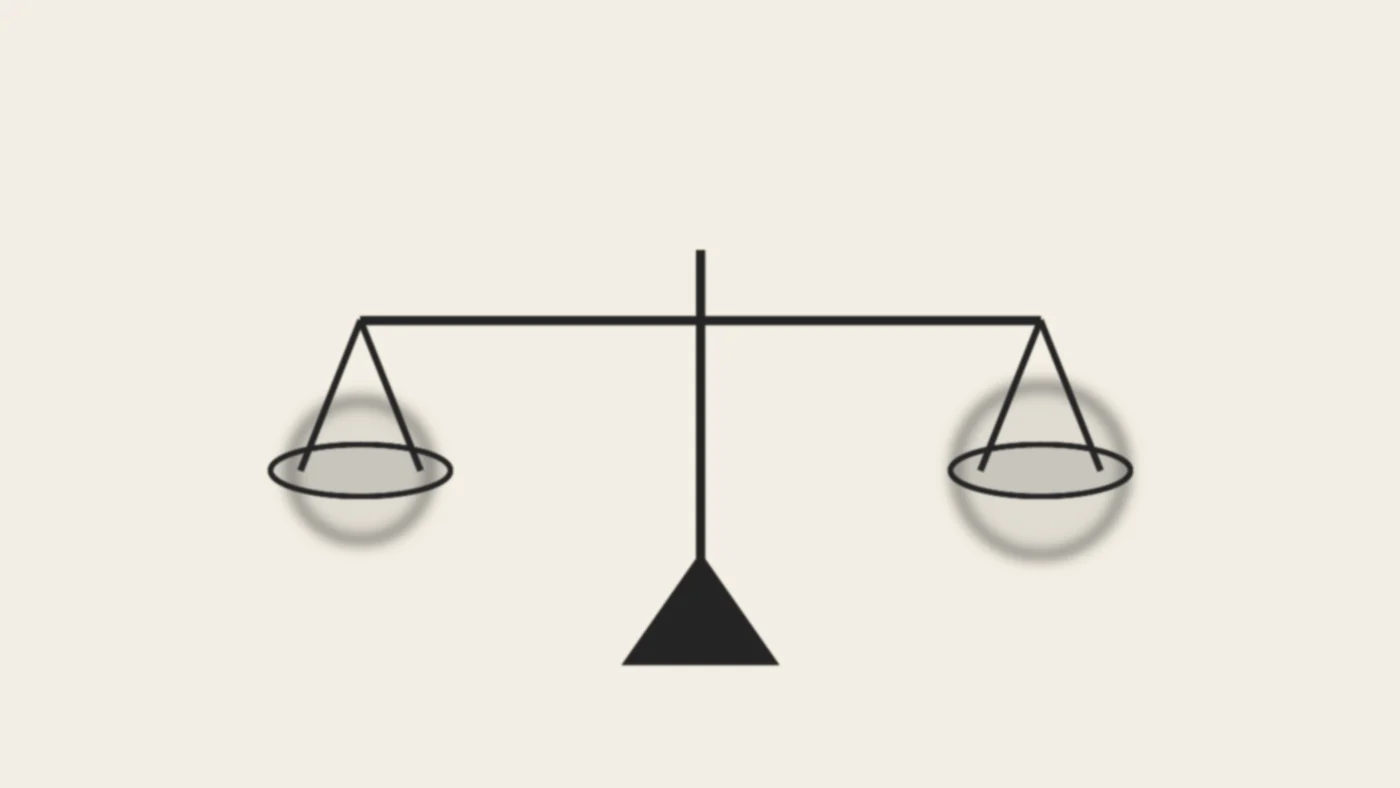
That is really all an exchange is: a marketplace with strict rules, fast computers, and a referee to make sure nobody cheats. The rules and the referee matter, because they are what let a stranger on the other side of the world safely buy a slice of a company from you in under a second.
What makes a stock's price move?
The short answer is supply and demand. If more people want to buy a share than want to sell it, buyers compete and the price rises until sellers are tempted in. If more people want to sell than buy, the price falls until buyers are tempted back. The price is simply where those two pressures meet right now.
But what drives that demand? Underneath it all, a share's price reflects what investors expect the company to earn in the future. A share is a claim on future profits, so anything that changes the outlook for those profits changes the price. Strong earnings, a promising new product, or a growing economy can push a price up. Weak results, new competition, or rising interest rates can push it down.
This is why prices can move on news before anything has actually happened to the business. The market is a forecasting machine as much as a scoreboard. It is constantly repricing slices of companies based on the best current guess about tomorrow. Those guesses are often wrong, which is exactly why prices bounce around so much day to day.
Why does the market tend to rise over the long run?
If prices are just a tug-of-war between buyers and sellers, why does the market drift upward over decades? Because behind the noise sit real companies that do real work. They reinvest profits, launch products, expand into new markets, and grow their earnings over time. The overall economy tends to expand, and as the businesses inside the market become more valuable, the market that owns them does too.
Here is an illustrative way to feel it. Suppose a broad basket of companies collectively grows its profits by a few percent a year on average, and hands some cash back as dividends along the way. Over one year that is barely noticeable. Over twenty or thirty years, growing profits compound into a much larger figure. These numbers are made up to show the shape of the idea, not a prediction, and real markets do not rise in a straight line.
That last point matters. The long-term upward drift is real historically, but it is bumpy. There are years, sometimes several in a row, when the market falls hard and holdings shrink. Markets fall as well as rise, and no return is guaranteed. The long climb is only visible when you zoom out, which is one reason checking prices constantly tends to hurt beginners more than help them.
So is this just gambling?
This is the fear that keeps a lot of people out, and it is worth answering plainly. Gambling has a fixed, negative expected outcome. The house is designed to win, and every spin is a fresh coin flip disconnected from anything productive. Buying a slice of a real business is different in kind. The company keeps working, earning, and reinvesting whether you watch the price or not.
You can use the market like a casino, by betting on tiny price swings and trying to guess the next move. That behaviour does look a lot like gambling, and most people who try it lose to those who simply own good businesses patiently. The difference is not the market itself. It is what you do with it. Owning broad, productive companies for the long term is the opposite of a coin flip, even though the day-to-day price jumps can feel like one.
If you want the simplest possible version of "own the whole productive market at once," that is exactly what an index fund does, and it is why so many beginners start there instead of picking single stocks.
Key takeaways
- The stock market is a marketplace for buying and selling shares, and a share is a slice of ownership in a real company.
- A company only receives money when it first sells shares at its IPO. After that, investors trade those shares with each other on the secondary market.
- You buy through a broker or app, which connects to an exchange that matches willing buyers with willing sellers, often in a fraction of a second.
- Prices move on supply and demand, which is ultimately driven by expectations about a company's future profits.
- The market tends to rise over the long run because it holds real businesses that grow, but the path is bumpy and markets fall as well as rise.
- Owning productive companies patiently is different from gambling. Short-term betting on price swings is the part that resembles a casino.
FAQ
How does the stock market work in simple terms?
Companies sell small slices of ownership, called shares, to raise money. The stock market is the marketplace where people buy and sell those shares with each other. When you own a share, you own a tiny piece of a real business, and its price moves as buyers and sellers change what they will pay for it.
Where does the money go when I buy a stock?
Almost always to another investor who is selling that share, not to the company. The company only receives money the first time shares are sold, at its listing. After that, shares trade between investors on the secondary market, which is the part most people mean by the stock market.
What makes a stock price go up or down?
Supply and demand, driven by expectations. If more people want to buy a share than sell it, the price rises until sellers appear. Underneath that, prices reflect what investors think a company will earn in future, so news about profits, the economy, or interest rates can move prices quickly.
Is the stock market just gambling?
No, though it can be used like a casino. A share is a real claim on a real business that can grow, earn profits, and pay dividends over years. Gambling has a fixed negative expected outcome. Owning broad, productive companies for the long term has historically grown wealth, even though prices fall as well as rise.
How do beginners actually buy shares?
Through a broker or investing app, which is a licensed middleman connected to the exchange. You open an account, add money, and place an order. Many beginners start by buying a single fund that holds hundreds of companies at once, rather than picking individual stocks.
Why does the stock market tend to rise over long periods?
Because it holds real companies that reinvest, innovate, and grow their profits over time, and the overall economy tends to expand. That long-term upward drift is not smooth or guaranteed, and there are painful down years, but productive businesses have historically become more valuable.
Start with the basics
The stock market stops being scary the moment you see it for what it is: a marketplace for slices of real companies. That is the kind of idea Brevity is built to make click. Our bite-sized lessons turn concepts like shares, exchanges, and market risk into a few minutes a day, so the jargon stops being intimidating. Start learning at downloadbrevity.com. If you are ready to put it into practice, our guide on how to start investing with $100 is a natural next step, and the difference between stocks and bonds shows how shares fit alongside the market's steadier half.